CONFERENCE
INTERNATIONAL SOCIETY FOR MUSIC EDUCATION 2004
TENERIFE, SPAIN
July 11 - 16, 2004
ABSTRACT (III)
(785 words)
CONTEXTS OF MUSICAL FORMATION: MUSIC EDUCATION BETWEEN THE FORMAL AND INFORMAL:
Masters of Music from Bahia (Brazil)
by
ALDA OLIVEIRA
This paper focus the musical tradition of Bahia (Brazil). It is studied through the oral histories (personal stories) of music masters from different musical styles and genres. The aim is to document and analyze the teaching and learning processes used by music teachers in formal and informal contexts. Capoeira, Candomblé, Chôro, Afoxês, Filarmônicas and other music groups master's knowledge are studied. This paper presents a) the theoretical basis for the research study; b) the relationship between formal and informal, masters of the culture and masters of the academy. c) recommendations for teacher preparation. Contemporary and traditional pedagogic theory is used as foundational basis for the study, compared to the transmission processes collected through oral histories of the music masters. Results of this study may help teacher preparation courses since it shows analytical data for the development of BRIDGES (PONTES) to promote musical and personal development motivated by the discovery of different worlds of sounds. The principle around the PONTES is that each didactic situation may be similar to another but they are never the same, they are unique. In order to deal with educational situations, music teachers need to learn and practice the design of several different pontes (bridges) or teaching/learning structures to fit each didactic situation and develop a natural flexibility. Teaching bridges and musical examples are given as illustrations aiming a more adequate teacher preparation to introduce students to the plurality of the sound worlds. Research in music education has tried to amplify its theoretical models of interpretation including its relations with culture. Several studies have been developed, aiming a more deep understanding of the interfaces of education with local culture (Oliveira, A., 1986; Rios, 1996; Borges, 1997; Prass 1998; Stein 1998; Gomes, 1998; Arroyo 1999). Other studies show that people learn music in social relationships, with opportunities and motivations found in the local context where they live (Gomes 1998; Corrêa 2000). By the other hand, sociology of music education studies (Souza, 1999, 2000; Hentschke, Oliveira e Souza, 2001) show the diversity of musical practices that exist in the society that help musical transmission for the population, so, the music teaching is done not only by the schools. Musical learning is done also through other communication media such as TV, Internet or other didactic materials self-instructional. These complex and specific tools need to be analyzed through distinct learning theories. The concept of PONTES ("bridges"), applied by this author in projects such as IMIT (Musicalization with Introduction to Keyboards), Maratona Musical (Music Marathon), Brasilmúsica Project and Tá Tocando Curriculum, is used to compare formal and informal teaching processes. The concept of planning through the idea of bridges shows to be adequate to plan class activities, modules, individual or group classes or larger units such as curriculum development. Pedagogical knowledge developed by traditional and innovative music educators will also be used as a basis to analyze data collected in the field. This study has the following objectives: a) identify the masters of knowledge and wisdom in different socio-cultural contexts at the state of Bahia; b) investigate and analyze the music masters' history of life, focusing on the learning and teaching processes, both oral and aural; c) describe and analyze the pedagogical and musical knowledge of the different actors involved, identified as the more relevant ones; d) investigate the formative processes in music of the actors from different contexts; e) analyze the transformations that occur in the processes of appropriation and transmission of music, considering individual, social and contextual characteristics. f) investigate the processes of initial and continued formation of music masters of culture and their disciples, focusing their relationships with professional claims; g) identify the professional claims and the different competencies needed to work with the informal processes of teaching and learning in music; h) analyze comparatively the knowledge of the masters of culture in music and the knowledge used by the academy to prepare music teachers. In conclusion, this study presents results from fase one, concentrating on the data on Master João Pequeno, of Capoeira Angola. There is much more being done and to be done in the future. Masters of music of Brazilian oral culture, from schools and university centers may share with music educators around the world their wisdom and knowledge through this perspective of PONTES (bridges) and their life histories. Idiosincrasies, common sense thoughts, values, methods, skills, products, curiosities of known Brazilian music masters will help to develop more qualified music programs for prospective music teachers and bring more light to the historical studies in music education literature, specially contributing for the ISME 2004 Conference Theme SOUND WORLDS TO DISCOVER.
26th CONFERENCE
INTERNATIONAL SOCIETY FOR MUSIC EDUCATION 2004
TENERIFE, SPAIN
July 11 - 16, 2004
(Text has 3734 words)
CONTEXTS OF MUSICAL FORMATION: MUSIC EDUCATION BETWEEN THE FORMAL AND INFORMAL:
Masters of Music from Bahia (Brazil)
by
ALDA OLIVEIRA
Theoretical Foundations
Research in music education has tried to amplify its theoretical models of interpretation including its relations with culture. Starting from the research topics that include education, music and culture in Brazil, several studies have been developed, aiming a more deep understanding of the interfaces of education with local culture (Rios, 1996; Borges, 1997; Prass 1998; Stein 1998; Gomes, 1998; Arroyo 1999). Other studies show that people learn music in social relationships, with opportunities and motivations found in the local context where they live (Gomes 1998; Corrêa 2000).
By the other hand, sociology of music education studies (Souza, 1999, 2000; Hentschke, Oliveira e Souza, 2001) show the diversity of musical practices that exist in the society that help musical transmission for the population, so, the music teaching is done not only by the schools. Musical learning is done also through other communication media such as TV, Internet or other didactic materials self-instructional. These complex and specific tools need to be analyzed through distinct learning theories.
From these research results one can conclude that music education systems, defined as formal and informal, are closed systems, and as such, they must be seen as distinct and complete. They seem to have specific methods, specific characteristics, and that they should not be mixed, in order to maintain its integrity, special features and efficiency.
This study if justified mainly by the needs of:
a) identification of the process through which individuals learn music in different cultural contexts;
b) identification of the internal relations between the formal and informal aspects in music education;
c) identification of the mechanisms of assimilation and accommodation in terms of music education development with individuals exposed to formal and informal;
d) identification of the analytic-structural aspects related to the different activities and repertories of Brazilian culture; and finally
e) because of the urgency to document the knowledge of the masters of the culture and of the population that surrounds them, before they forget or die.
This study has the following objectives:
a) identify the masters of knowledge and wisdom in different socio-cultural contexts at the state of Bahia;
b) investigate and analyze the music masters' history of life, focusing on the learning and teaching processes;
c) describe and analyze the pedagogical and musical knowledge of the different actors involved, identified as the more relevant ones;
d) investigate the formative processes in music of the actors from different contexts;
e) analyze the transformations that occur in the processes of appropriation and transmission of music, considering individual, social and contextual characteristics.
f) investigate the processes of initial and continued formation of music masters of culture and their disciples, focusing their relationships with professional claims;
g) identify the professional claims and the different competencies needed to work with the informal processes of teaching and learning in music;
h) analyze comparatively the knowledge of the masters of culture in music and the knowledge used by the academy to prepare music teachers.
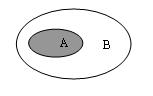
This study starts a line of research very important for the development of historical texts related to memories and histories related to music teaching in Bahia. This study is included in a group of three different projects of three researchers. Its focus is on human action in time, in its space and social memory. The importance of this activity relates to the fact that daily decisions in society pass through political, economical and cultural requests and are defined in ideological level; we know that all nations that have their "history in the hand" as an instrument of construction, or, who have memory and historical awareness, for sure, will be the owner of present and future. Every group who forgets their past, who erases their memory it is easily caught by tricks and interested groups; they pain their present and become bewildered before the future. (Félix, 1998: p. 19) This research has its focus in the analysis and understanding the musical and educational knowledge and wisdom of masters of Brazilian music culture, their plays, bridges with disciples, identifying how they are developed, articulated and transmitted. The aim is to listen to their accounts on their life and musical experiences, trying to identify the subjective meanings attributed to his musical experiences. The methodology used is the oral history, a branch of historiography, which is adopted as the most adequate to rescue and value the memory of the masters of music culture of Bahia. The relationships between formal and informal contexts: masters of culture and masters of music academy The relationship between formal and informal contexts is yet unbalanced in Brazil. Not every school has music in curricular activities, while music is present in most of social gatherings, commercial, political or cultural/educational activities. Even so, schools have special difficulties to articulate with community music and to understand the pedagogical principles around the informal music settings. The music teacher formed through the academic programs in general do not have the skills needed to articulate didactic structures to move from formal to informal activities. The traditional division between them is still present in curricular settings, in both ways. So, this study is interested in observing the special characteristics that characterizes both types of music teachers in Brazil, in order to help to educate the music teacher to deal with different music styles, repertoires, populations and socio-cultural contexts. Observing a master of Capoeira such as Mestre João Pequeno (December 27th, 1917; he is now 86 years old) or a master from university settings such as Ernst Widmer (deceased) or his followers, we can see that they both share certain characteristics such as: leadership, charisma, extraordinary specific music and pedagogic skills, innovative ideas in music, administration and in cultural areas, modesty, respectability, joy, intelligence. Some characteristics may be very special, for example: the informal masters of music were in general self-taught or have learned with their old masters in flexible contexts. The duration of this preparation depends on the individual and the master's requirements, training is done in-groups in open spaces (observers may assist training) and in general they plan teaching by stages that the disciples have to overcome. Masters of culture care very for discipline, hierarchy, respects for the oral / aural traditions and social responsibilities in the context. But for both formal and informal teacher preparations in music they care about the musical level of the teacher: the difference is that in informal contexts the master evaluates the musical competencies of the disciple and in formal settings the evaluation is done by many different teachers and by the school curricular program. This form of evaluation is subject to many variables and different criteria. Consequently, it is subject to many faults and problems. Music teaching has to be musical (Keith Swanwick, 1999). Consequently, the musical formation of the prospective music teacher has to include inventing, composing, reading, writing, listening, performing, conducting, understanding, knowing, appreciating, planning, analyzing, administrating, stimulating MUSIC. It is also needed the support disciplines in pedagogy, psychology, curriculum, cultural studies, and so on, to develop a broader educational view. The music teacher has to feel and learn how to deal with the expressive characteristics of music and with its formal (structural) and socially delineated contents. ISME defend music education values, which include the importance of the musics of the world, without distinctions, for the education of all individuals. A multicultural vision of repertoires in nowadays very ecological for education around the world. But we still preserve some prejudice or bad musical practice in schools. The document published by Dr. Clifford Madsen, "The Housewright Declaration" ("Vision 2020, The Housewright Symposium on the Future of Music Education", at Florida University in Tallahassee) defends that all musics have space in the music curriculum, not only the classical tradition has to be preserved and promoted; music educators must be aware of the world musics and integrate them in classroom activities (2000, p. 219). There still exists some inconsistency about the relationship between the terms formal and informal in educational contexts in Brazil. In developed countries formal is generally used for schools and informal for non-school settings. The legalization of the system distinguishes them. Brazilians refer to these terms using more contextual meanings, using inherent and external music meanings, tied to music because of social, aesthetics, economical, cultural factors. Tied to formal, are the planned activities that use well bahaved musical activities, classical music or even foreign movie music, or activities that use orchestral music. Some people relate even formal to "well behaved musics" in terms of identification with higher souci-economic status or music that implies less body movements using sexual appeals. Not always are implicit concepts of complexity, erudition (learning), or to the condition of being inside or outside the schools. We suspect that there exists a very strong prejudice develop across time, mainly inside the universities, but also outside, that considers informal, something more natural, spontaneous, learned outside schools, without constrains, self-learned. It may be a subtle process of common sense directed by the dominating classes. The lower status population in "convinced" that they are inferior, with no education, incapable of formalization, erudition. Oliveira (2001) considers that exists planning in different degrees in formal and informal musical activities.. All activities have different levels of planning: dimensions, intentions, timings, contexts. These processes include mental actions, reasoning, values, reflections, interpretations, human critical perception of Man in relationship with the world. In essence, the variable for the music educator is the relationship between the spontaneous and the conscious. These mental actions are conceived by the individual in relationship to his past experiences with the world, with people in his context, with the communication media. Are these media "informal"? Sometimes the spontaneous encounters may display more "formal" bridges, pedagogical actions or activities than in "formal" contexts, since in some cultures some bridges are crystallized and formalized in the communities. Oliveira (2001), brings a view of existing an implicit formal and informal characteristics in all musical activities. Starting with Euler's Math theory from XVIIIth century (Machado, 1988), the author makes a connection to formal and informal concepts. Euler proposes four basic propositions, explained by diagrams. In the first, every A is B, all elements of the set A belong also to set B. In this case the set A it is included in B.
Figure 1: Proposition 1: set A is included in set B A second relationship is: some A is B, or, there is at least an element which belongs, simultaneously, to A and B. It is a relationship of intercession. There is an element of intercession between A and B.
Figure 2: Proposition 2: there is na element of intercession between sets A and B.
A third relationship it is: A is not B. A and B do not share common elements, they are distinct or separated.
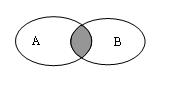
Figure 3: Proposition 3: sets A and B are distinct.
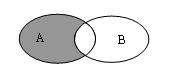
The fourth relationship is: some A is not B, or, there exist some elements of A that are not B, or, A it is not a subset of B. This is a set of difference.

Figure 4: Proposition 4: some part of set A is not B.
Oliveira proposes (taking Euler's propositions as a starting point), that there may be different degrees of formality and informality that perpass these activities. As an example, let's take the concept of improvisation and composition. The improvisation may be a process of creation with less erudition (formality) and more flexibility (informality), but with planning (formality) and preparation (formality), even being instantaneous. Another example: the curriculum as a document is formal but it provides also recommendations for practices (informal). Teachers' experiences, values are incorporated through more informal ways. Consequently even the schools' curricula may share the formal and informal concepts in its essence. The written tradition in music includes the oral experiences and repertoires, transformed, elaborated. The class plans elaborated by music teachers are a reflex not only of curricular document, but also from the practical actions of teachers in daily school, home and community activities. The teacher education, acquired in academic or community, may have learning/teaching structures that were registered in the teacher's memory, so, the degree of formality and informality may vary. Art music (formal) contains elements of the oral tradition, elaborated and documented in scores or films, video, CDRom, etc. Pop music concentrate its actions in orality (informal), but it has also more formal characteristics such as documentation in records, videos, small magazines with tablatura and pop chords. The formal reinforces the analysis, the planning. The informal reinforces the making, spontaneity, expression. Depending on the situation, the level of conciousness of the actors, may be created or organized several bridges of teaching that are adequate to the contexts and individuals. Music education may concentrate in permanent programs for individual development (in cognitive, affective, psychomotor, sociocultural aspects).
Recommendations for Music Education
School is socially and politically needed to teach and promote music, in spite of the plurality and effectiveness of informal music in community settings. But in order to get the advantages of the plurality of community music and the knowledge displayed by the masters of culture, we recognize that schools need to incorporate new approaches to articulate with more informal activities, repertoires, pedagogical processes, materials and know-how. The exchange between formal and informal will certainly provide better quality to discover new worlds of sounds. We believe that both academy and community may get more positive results if formal and informal processes of music education are studied respecting their integrity and essence. The limits can only be respected if we as music educators may analyze and study them with care and detail. If one takes informal (oral) traditions and use them in schools, using inadequate techniques, we can do a lot of harm not only to the repertoire but also for the students and to the profession. According to Carlos Brandão (1981), nobody escapes from education: in streets, in churches, in musical groups, life is always mixed with education, and schools are not the only place where it happens and the teacher is not the only practiser. The different types of knowledge (practice and theory) of the people and the academy must be analyzed and experienced during the process of teacher formation, aiming to develop conditions for humanism and musical solutions. Exchange from one context to another is recommended: solidarity, respect, and knowledge about the other helps to develop preservation procedures, deepness and awareness about the musics of the world. Oliveira (1999) mentions:
The role of the music educator transcends the classroom walls or the school. He or she needs to be in the community, in the neighborhood, in enterprises, in televisions, in radios, in ONGs. The choices are many and broad, but in each one, has to be done to influence the formal or informal curricular decisions in the different contexts. Besides, his or her role must be to develop student 's awareness. They may be better citizens and more aware of the need for a better and ecological education. (Oliveira,1999. Curriculum for Pracatum School of Professional Musicians: introductory text)
The South American and Caribbean context has a varied and diverse musical repertoire but the educational reality presents great socio-economic difficulties and problems which influences the educational scene in the music area. Music consumption is similar to all developing countries subject to the globalization process. The racial and cultural mixture of the continent makes the music of its people one of the most exciting in the world, although the governmental decisions do not really give incentives to life-long quality music programs. Music serves as a resource for social group formation and a growing tendency in both education and society as a whole towards a respect for the whole diversity of musics. Latin-American music educators currently face many problems in re-introducing music into schools, namely: the short duration of the music lessons; the lack of adequate infrastructure for music lessons; the tendency to organize the school calendar around festivities, visitors, educational trips or other such events; the high level of truancy; lack of teachers’ competence to teach the whole diversity of musics that abound in the region; lack of articulation between formal and informal music and artistic activities. In spite of these problems, one can notice several individual examples of good teaching and and many pop and classical professional musicians are developing successful music careers. In some regions music is even the center of the social life of the community. Capoeira groups and Candomblé religious communities in Brazil use music as one the most important support for their lives. Many NGOs of the third sector use the artistic languages, especially music, as the main support for curricular development with social, cultural and professional benefits for the participants. The teaching of music nowadays has to consider many different variables and conditions in order to be efficient, adequate, musically and socially meaningful. Classical methodologies are still valid and efficient, but the world and the society have changed gradually. Consequently, teacher preparation programs need to consider more flexible, creative and competent curricular options. Some examples are presented. They can be applied or transformed into curricular developments and methodological guidelines. Teachers should know how to approach the student, the context and their actors, the methods, the curriculum, the school, the music repertoire and its performance in order to develop appropriate educational bridges. The music teacher is considered by this author as a composer of PONTES or BRIDGES between what the student knows and the new knowledge to be acquired. The concept of BRIDGES (in Portuguese, PONTES) was developed by this author, to substitute and explain better the terms structures of teaching/learning used since the 80's in several articles. The model (in Portuguese) uses an acrostic form to explain the educational points. The principle around PONTES is that each didactic situation may be similar to another but they are never the same, they are unique. In order to deal with educational situations, music teachers need to learn and practice the design of several different pontes (bridges) or teaching/learning structures to fit each didactic situation and develop a natural flexibility.
The main characteristics of these bridges (PONTES) are the following:
P. Positive approach, perseverance, articulation power, and ability to sustain student's motivation;
O. Observation capacity: carefully observe the student, the context, the daily situations, repertoires, representations;
N. Naturalness, simplicity on the relationships with the student, the curricular and life contents, with the institutions, the context and the actors;
T. Techniques fit for each didactic situation; ability to design, develop and create new adequate teaching/learning structures;
E. Expression: creativity, hope and faith towards the development and the expressiveness and learning ability of the student;
S. Sensibility to the several different musics and to the artistic languages in general.
The idea of PONTES ("bridges") was applied by this author in projects such as IMIT (Musicalization with Introduction to the Keyboards), Maratona Musical (Music Marathon), Brasilmúsica Project and Tá Tocando Curriculum. The concept may be adequate to plan class activities, modules, individual or group classes or larger units such as curriculum development. From the several bridges created or composed by music teachers in the classroom, by curriculum designers, by outsiders or by individuals from the community, the pedagogical coordination may organize larger structures, such as projects, units, special programs, with more distant targets.
The IMIT project of musicalization introduces the children to music by using the voice, body movements, local and regional percussion instruments and different kinds of keyboards (acoustic and electronic), including piano, electronic keyboards, xylophones, metalophones, and other traditional or innovative keyboards. In approximately two years, children sing a number of melodies from different places, styles and genres, they perform sound structures with body movements and choreographies, they create their own compositions, they learn how to read and write music at their own pace and levels, and they start to be acquainted with the keyboards and percussion instruments.
The MARATONA MUSICAL includes a large list of musical examples of different genres and composers. Students listen and experience a list of musical examples. They are expected to memorize the names and data about the composers, period and place , title of the composition and instruments or voices of the performance. The students listen and analyze musics with the help of music teachers, regular teachers or family members. Students are organized in five-people groups to fill the test form in a collaborative way. The groups are asked also to create or compose some music or arrangement during the finals. There is a group of judges to sum up the points of the different groups. While they wait for the results, they present group compositions to the public. The activity is developed as an important musical encounter and reflects a broad musical teaching, since it uses activities of composition, appreciation and performance.
The concept of bridges was used also to create the curriculum for the Pracatum School ("Tá Tocando"). Many structures from the context and from teacher's experiences are described to serve as initial and final motivations for the development of other individual or group musical productions. Each different module or teacher activity may teach concepts, abilities, values, processes, etc. These bridges are based on the different types of musics that were chosen. Students are supposed to express themselves composing music with many different purposes and themes, applying what they have learned. They are evaluated by these compositions and by their participation and learning during the classes.
In the project BRASILMÚSICA developed at the Post-Graduate level of the Master and Doctoral degrees in Music at UFBA, students were asked to choose a group of students from a regular school to teach them two Brazilian musics, to have them perform the best as they could. Some specific procedures were written on the evaluation of the students from the regular schools and from the post-graduation course by the author.
In conclusion, this study is presenting results from fase one. There is much more being done and to be done in the future. Masters of music of Brazilian oral culture, from schools and university centers may share with music educators around the world their wisdom and knowledge through this perspective of PONTES (bridges) and their life histories. Idiosincrasies, common sense thoughts, values, methods, skills, products, curiosities of known Brazilian music masters will help to develop more qualified music programs for prospective music teachers and bring more light to the historical studies in music education literature.
REFERENCES
ARROYO, M. (1999): Representações sobre práticas de ensino e aprendizagem musical: um estudo etnográfico entre congadeiros, professores e estudantes de música. Doctoral Thesis. Elizabeth Lucas, Supervisor. Universidade Federal do Rio Grande do Sul, Porto Alegre.
BRANDÃO, C. O que é Educação. S. Paulo: Brasiliense, 1981.
FÉLIX, L. O. (1998): História e Memória: a Problemática da Pesquisa. Passo Fundo: Ediupf.
GOMES, C. H. S. (1998): Formação e Atuação de Músicos das Ruas de Porto Alegre: um Estudo a Partir dos Relatos de Vida. Master Dissertation. Dr. Jusamara Souza, Supervisor. Porto Alegre: Universidade Federal do Rio Grande do Sul, Instituto de Artes, 1998.
GOMES, C. H. S. (1998): Formação e Atuação de Músicos das Ruas de Porto Alegre: um Estudo a Partir dos Relatos de Vida. Master Dissertation. Dr. Jusamara Souza. Porto Alegre: Universidade Federal do Rio Grande do Sul, 1998.
HENTSCHKE, L. OLIVEIRA, A.; SOUZA, J. (1999): Relação da Escola com a Aula de Música: Seis Estudos de Caso em Escolas de Porto Alegre-RS, Santa Maria-RS, Salvador-BA, e Florianópolis-SC. Porto Alegre: Série Estudos.
LIMA, L. N. Mestre João Pequeno: uma Vida de Capoeira. Salvador: independent production, 2000.
MACHADO, N. Matemática por Assunto: Lógica, Conjuntos e Funções. Vol. I Brasília: Ed. Scipione Ltda., 1988.
MADSEN, Clifford (ed.).Vision 2020. The Housewright Symposium on the Future of Music Education. Tallahassee: Florida University, 2000.
OLIVEIRA, A. Música na Escola Brasileira. Frequência de Elementos Musicais em Canções Vernáculas da Bahia Utilizando Análise Manual e por Computador: Sugestões para Aplicação na Educação Musical. Doctoral Thesis (1986), The University of Texas at Austin, USA. Porto Alegre: Associação Brasileira de Educação Musical, 2001.
OLIVEIRA, A. & COSTA FILHO, M. "Educação e trabalho em música: estudo I". Quaderni della SIEM, Vol. 16, pp. 234-239, 2000.
OLIVEIRA, Alda. "Contexts of Musical Formation: Music Education Between the Formal and the Informal. Masters of Music from Bahia (Brazil)". Salvador, Bahia: Integrated research project financed by the - National Council for Research (Brasília, 2003-2006). Team: Doctors Jusamara Souza (UFRGS), Alda Oliveira (UFBA) and Liane Hentschke (UFRGS) Institutional support: Federal University of Rio Grande do Sul and Federal University of Bahia
PRASS, L. (1998): Saberes musicais em uma bateria de escola de samba: uma etnografia entre os Bambas da Orgia. Master Dissertation. Dr. Elizabeth Lucas, Sup. Universidade Federal do Rio Grande do Sul, Porto Alegre.
RIOS, M. (1997): Educação Musical e Música Vernácula: Processos de Ensino e Aprendizagem. Master Dissertation. Dr. Alda de Jesus Oliveira, Sup. Salvador: Universidade Federal da Bahia, Escola de Música.
STEIN, M. A. (1998): Oficinas de Música: uma etnografia dos processos de ensino e aprendizagem musical em bairros populares de Porto Alegre. Master Dissertation. Dr. Elizabeth Lucas, Sup. Universidade Federal do Rio Grande do Sul, Porto Alegre.